Number Twelve
The first person to notice was the postman.
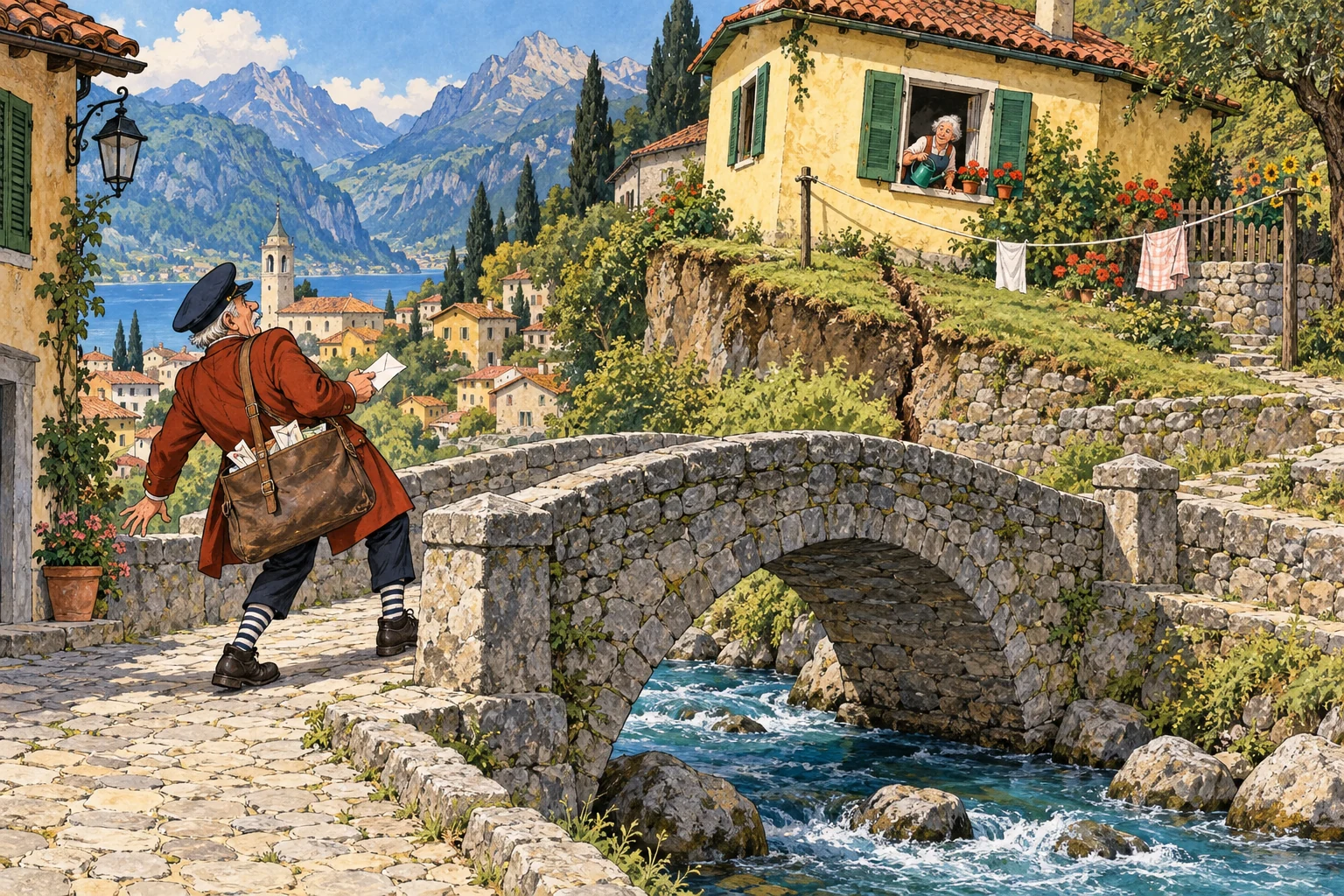
He had delivered a letter to Number Twelve and was halfway to Number Fourteen when Number Twelve overtook him.
He went home.
There were provisions in his contract for dogs.
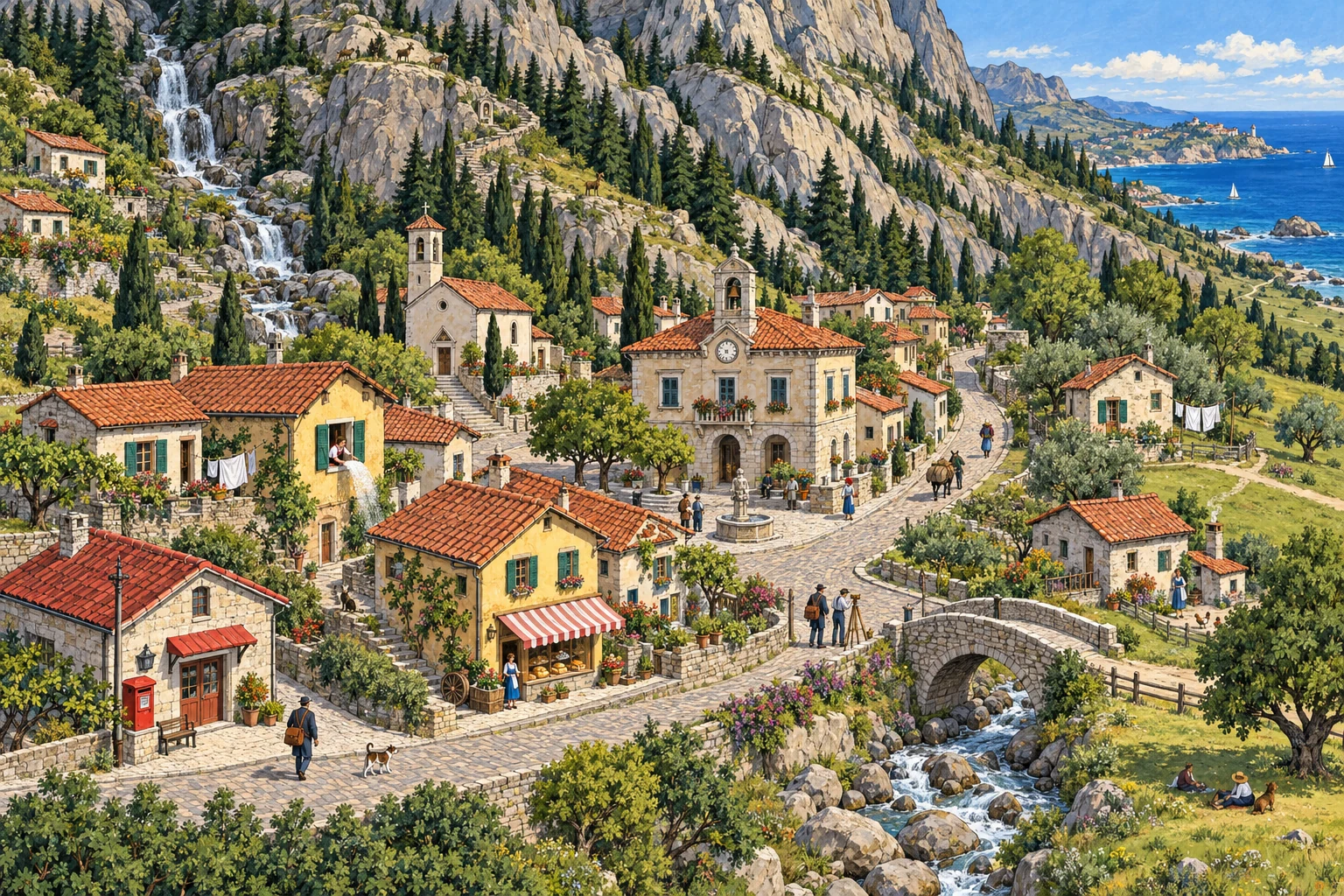
In Bellwether, the lower numbers stood on the mountain and the higher numbers stood on the common. A little stone bridge joined them. The distinction had previously concerned only the rates.
Pell had been standing on that bridge, deciphering an address. Mrs Morrow had passed him at her window, watering a geranium.
‘Lovely morning,’ she had said.
An exception to delivery
At half past eight, the postmistress found him in his kitchen, still wearing his bag.
‘You have forty-three letters.’
‘Forty-two. I delivered one.’
‘Then why have you stopped?’
Pell described Number Twelve. The postmistress sat down. Outside, a spoon rattled once against a saucer. They both watched it until it stopped.
‘There is a space for exceptions,’ she said at last.
Pell fetched his delivery book. He considered weather. He considered livestock. Then, beneath both, he wrote: Address unwilling to remain at address.
The postmistress read this twice.
‘I’ll need someone to confirm that.’
A person with a ruler
Esme Tern was the district surveyor. She had spent eleven years resolving disputes about hedges. She arrived with a tripod, three pencils and her daughter Nell, whose school had closed because its front steps no longer met the road.
At the bridge, Esme found a fresh strip of earth between the mountain and the common. Roots hung from it. One beetle was examining the interruption.
She measured the gap. Forty-seven centimetres.
She sharpened a pencil and measured again.
Fifty-two.
Esme put the pencil behind her ear.
What the instruments said
For the next hour, she sighted the railway signal, the mill and the far church tower. They stayed where they belonged. The mountain did not.
It moved in little fits, so quietly that she kept missing the beginning. Its trees travelled with it. So did the houses, the cistern and a woman who was shaking a tablecloth out of an upstairs window.
The mayor arrived carrying his own chair.
‘Could it be the common moving backwards?’
‘That was my first question,’ said Esme.
‘And?’
She let him look through the instrument.
The people in its path
By eleven, the bakery had sold out of bread. People had come for news and felt awkward leaving empty-handed.
By noon, the mountain had travelled eleven metres. The mayor sent someone to warn the farms below. Then he sent someone after the first person with instructions to sound less alarming.
Esme walked ahead of the mountain. There was a cabbage field. Beyond that, a road, two farms and a reservoir.
She opened a clean page.
For the first time in her working life, the important part of a boundary was where it would be tomorrow.
Forty-two letters
Pell returned after lunch. He stood on the common and waited while the bridge slid the last few inches past him. Then he stepped across the gap onto the mountain.
Up there, his route was still his route. The butcher’s dog still disliked him. Number Ten still smelled of boiled onions. At Number Twelve, Mrs Morrow asked whether something was wrong.
Pell looked past her garden at the valley. A distant tree was slowly disappearing behind her chimney.
‘Your view’s changing,’ he said.
She leaned out.
‘Oh. I rather liked that tree.’
Something to take with it
At dusk, Esme found Nell beside the new strip of earth. She had put a heel of bread in a crack in the rock.
‘What’s that for?’
‘I don’t know what it eats.’
Esme almost explained what a mountain was. Then she looked at the bridge, which was now eleven metres from the place where she had drawn it that morning.
‘Leave it there,’ she said.
That night, Pell’s delivery book lay open on the kitchen table. Forty-three letters. Forty-three ticks.
Below them, the postmistress had signed the exception.
Under reason, in her neatest handwriting, she had put: Confirmed.